


United States
2027 UCI Gran Fondo World Series
Tartu Rattaralli Delivers a Fierce 45th Edition with 3000 riders


2027 UCI Gran Fondo World Series Latest News and Results
Oct 20, 2026 -
2026 Zadar Granfondo Falkensteiner Borik Results: Magda Milosz and Jure Medved shine in Croatia
Oct 04, 2026 -
2026 UCI Granfondo Tre Valli Varesine Results: Rasa Rumsaite and Alessio Ferraro Morey take Victory
Sep 25, 2026 -
2027 UCI Gran Fondo World Championships to be held in France
Aug 28, 2026 -
2026 UCI Gran Fondo World Championships Team Relay Results
Aug 28, 2026 -
Irishman Paul Kennedy forced to ride competitors bike
Aug 27, 2026 -
2026 UCI Gran Fondo World Championships Time Trial Results
2027 UCI Gran Fondo World Series Coming Events

3,000 Riders, 30 Nations, and a Tactical Masterclass: Tartu Rattaralli Delivers a Fierce 45th Edition
The morning light over Tartu arrived cold and sharp, the kind of light that exposes everything — nerves, ambition, and the truth of who’s ready to suffer. Three thousand riders from thirty nations rolled toward the start, the hum of carbon wheels and clipped-in tension rising like static before a storm.
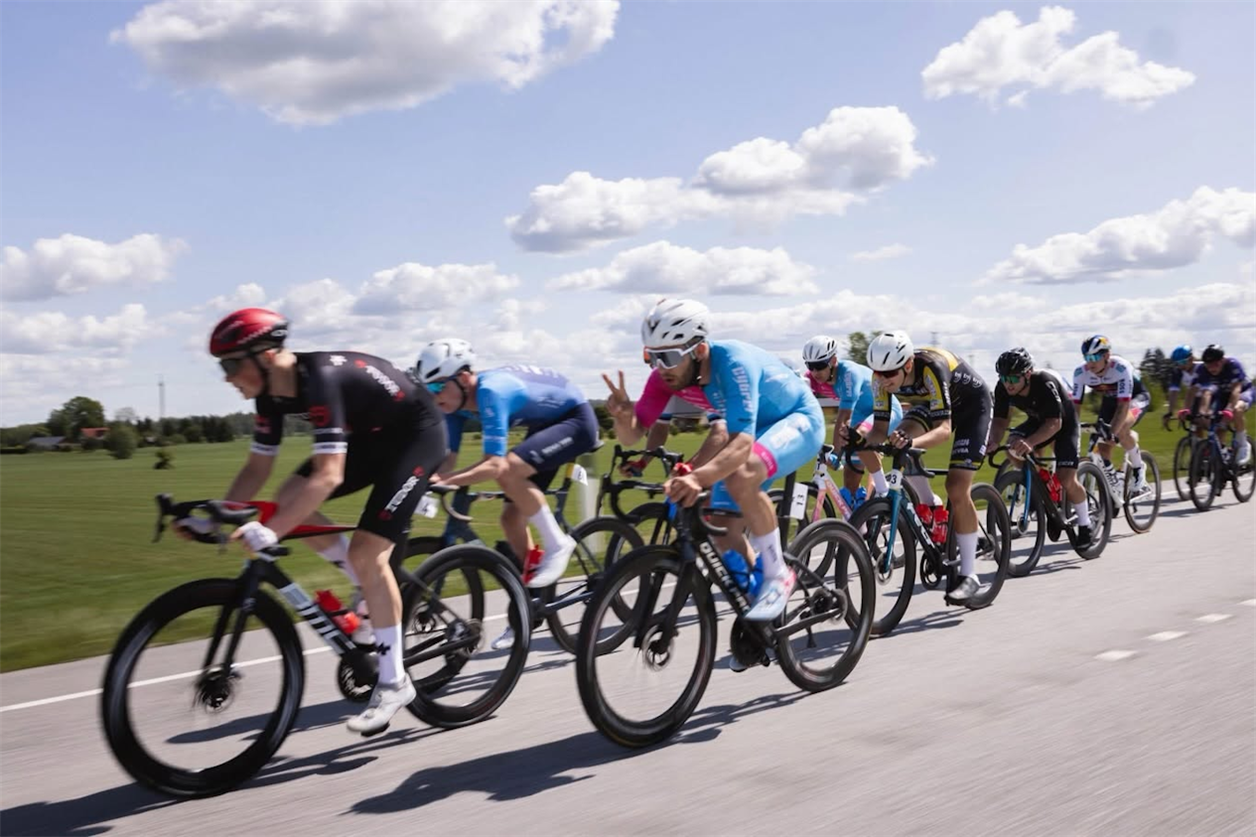
The 45th Tartu Rattaralli wasn’t just another edition; it felt like a reckoning. A test of speed, instinct, and the ability to stay calm when the peloton turns feral.
From the first kilometres, the Granfondo took on a shape of its own. The pace was vicious, the kind that snaps elastic and punishes hesitation. Estonian home hero Lauri Tamm rode with the quiet confidence of a man who knew exactly what was coming. He didn’t waste a single movement. He surfed the front, never exposed, never rattled, reading the wind and the rhythm like a second language. Behind him, Oskar Nisu did what he always does — he made the race harder. Every surge, every acceleration, every moment of pressure had his fingerprints on it. And tucked in the shadows, Denmark’s Asger Rojbek Sørensen played the long game, conserving, calculating, waiting.
The race never truly broke apart; it simply thinned, layer by layer, until only the strongest remained. By the final run-in, the front group was a knife-edge of tension. Tamm sat third wheel, eyes forward, breathing steady. Nisu tried to stretch the group one last time, but the elastic didn’t snap. Sørensen held the wheel with the patience of a man who knew he had one shot and wouldn’t waste it.
When the sprint came, it wasn’t chaos — it was inevitability. Tamm launched with the timing of a rider who has lived this finish a hundred times. The crowd roared as he crossed the line, defending his title with a performance that felt less like a victory and more like a homecoming. Nisu followed, emptied but unbroken, the architect of the day’s brutality. Sørensen completed the podium, the outsider who read the race with perfect clarity but couldn’t quite rewrite its ending.
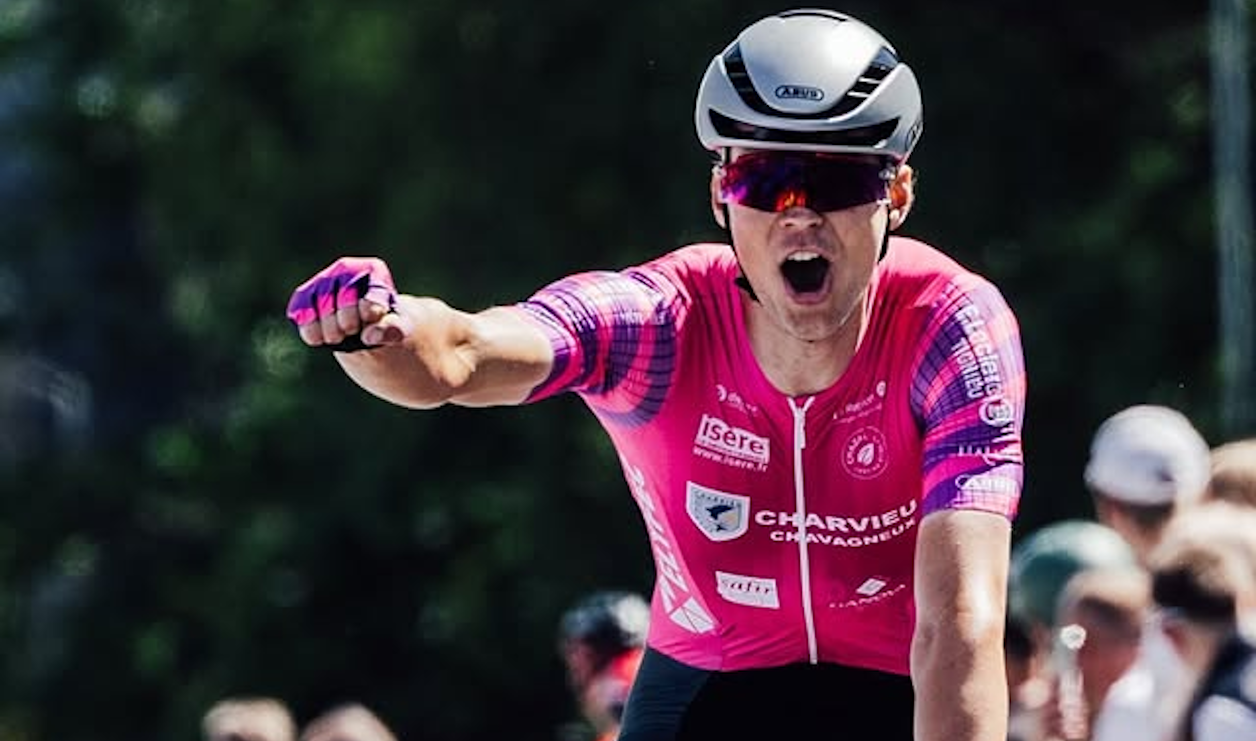
The women’s Granfondo unfolded with a different kind of violence — quieter, more controlled, but no less ruthless. Akvile Gedraityte didn’t wait for the race to come to her. She seized it. A crosswind section became her launchpad, and with one decisive acceleration she forced the split that would define the day. Only Kristel Sandra Soonik could follow, gritting her teeth through every surge, refusing to let the elastic break. Behind them, the field shattered into fragments.
Gedraityte rode with the authority of a rider who understood the cost of hesitation. She dictated the pace, shut down counters before they formed, and turned the front group into her own private arena. Soonik hung on with a fighter’s instinct, closing gaps others couldn’t, keeping the race alive long after her legs begged for mercy. Further back, Kristi Kuldkepp waged a different war — a war of discipline. She didn’t chase shadows. She didn’t panic. She rode her own tempo, steady as a metronome, picking off riders blown apart by the early violence until the podium was hers.
By the time the finish line banners came into view, the story was already written. Gedraityte crossed alone, a rider in total command. Soonik followed, battered but unbroken. Kuldkepp arrived with the look of someone who had won her own private battle.
As the crowds swelled and the roads filled with exhausted riders rolling home, one truth hung in the air: Tartu Rattaralli remains one of the purest tests in northern Europe. A race where speed becomes a weapon, where tactics decide fates, and where champions are forged not by luck, but by clarity in the chaos.
And on this day, in this edition, the riders who stood on the podium didn’t just survive the storm — they shaped it.
2026 Tartu Rattaralli 135km Granfondo Top 10 Men
1. Lauri Tamm — EST — 02:45:47 — +0:00
2. Oskar Nisu — EST — Palmako AS — 02:45:52 — +0:06
3. Asger Rojbek Sorensen — DEN — BHS-PL Beton Bornholm — 02:45:53 — +0:07
4. Nikolaj Mengel — DEN — AIRTOX-Carl Ras — 02:45:54 — +0:08
5. Thor Vangso Nielsen — DEN — AIRTOX-Carl Ras — 02:45:57 — +0:11
6. Norman Vahtra — EST — Palmako AS — 02:45:57 — +0:11
7. Ville Merlöv — SWE — BHS-PL Beton Bornholm — 02:45:57 — +0:11
8. Markus Mäeuibo — EST — National Team Estonia — 02:45:57 — +0:11
9. Jekabs Olivers Skrapcis — LAT — Energus Cycling Team — 02:45:57 — +0:11
10. Jude Gabriel Francisco — PHI — Victoria Sports Pro Cycling — 02:45:57 — +0:11
2026 Tartu Rattaralli 135km Granfondo Top 10 Women
1. Akvile Gedraityte — LTU — 02:46:01 — +0:15
2. Kristel Sandra Soonik — EST — Hawaii Express — 02:46:34 — +0:48
3. Kristi Kuldkepp — EST — Peloton — 03:12:48 — +27:02
4. Anita Antone — LAT — Dobeles Dzirnavnieks/FeelFree — 03:12:56 — +27:10
5. Carol Kuuskman — EST — CFC Spordiklubi — 03:21:39 — +35:53
6. Karina Toming — EST — Tripassion Triatloniklubi — 03:22:04 — +36:18
7. Mariann Koik — EST — Porter Racing — 03:23:38 — +37:52
8. Kätlin Kukk — EST — TÜASK — 03:23:41 — +37:55
9. Anette Zukker — EST — UP43 Triatloniklubi — 03:23:50 — +38:04
10. Gisele Rang — EST — CFC Spordiklubi — 03:23:51 — +38:05
2026 Tartu Rattaralli 66km Mediofondo Top 10 Men
1. Andrius Puodžius — LTU — 01:31:14 — +0:00
2. Steven Sumberg — EST — Porter Racing — 01:31:14 — +0:01
3. Paul Puuraid — EST — 01:31:15 — +0:01
4. Martin Karro — EST — TÜASK — 01:31:15 — +0:02
5. Kevin Kalle Kell — EST — CFC Spordiklubi — 01:31:15 — +0:02
6. Oliver Peerna — EST — TÜASK — 01:31:16 — +0:02
7. Hubert Maripuu — EST — CFC Spordiklubi — 01:31:16 — +0:02
8. Kristian Ebras — EST — Kalevi Jalgrattakool — 01:31:16 — +0:03
9. Edvin Jürgen — EST — 01:31:17 — +0:03
10. Tarvi Tuisk — EST — Porter Racing — 01:31:17 — +0:03
2026 Tartu Rattaralli 66km Mediofondo Top 10 Women
1. Anni Adele Ots — EST — Kalevi Jalgrattakool — 01:31:18 — +0:04
2. Eliis Veske — EST — Lõuna-Eesti Rattaklubi — 01:31:18 — +0:05
3. Samanta Luberte — LAT — 01:31:26 — +0:12
4. Carola Hirv — EST — CFC Spordiklubi — 01:37:35 — +6:21
5. Eva Karu — EST — Swedbank Spordiklubi — 01:41:46 — +10:32
6. Merilyn Sarikas — EST — Swedbank Spordiklubi — 01:41:49 — +10:35
7. Matilde-Marie Loorits — EST — 01:41:54 — +10:40
8. Ineta Paciauskaite — LTU — 01:42:00 — +10:46
9. Eleanor Rang — EST — CFC Spordiklubi — 01:42:11 — +10:57
10. Kristi Oras — EST — Moomoo Klubi — 01:42:13 — +10:59
Link to 2026 Tartu Rattaralli Results: https://www.championchip.ee/live/3225