Four-Time Tour de France Champion Chris Froome finally announces Retirement
The curtain has finally fallen on one of the most dominant, dramatic and era-defining careers in modern cycling. Chris Froome, four-time winner of the Tour de France, conqueror of the 2018 Giro d’Italia, and double champion of the Vuelta a España, has officially confirmed his retirement from professional racing.
Barcelona, July 3, 2026 — The announcement — long anticipated yet still seismic — came on Friday at the Grand Départ in Barcelona, where the 41-year-old stood before the world’s media and acknowledged the end of his extraordinary journey.
“Unfortunately, there was that fall last summer. That wasn’t the way I wanted it to end. But even then, I knew it was over,” Froome said. When asked if he had now definitively retired, he answered simply: “Yes.”
A Career Defined by Triumph — and a Final Battle for Survival
Froome’s retirement closes the book on a career that reshaped the sport. His dominance with Team Sky between 2010 and 2020 delivered an unprecedented era of British success, including four Tour de France victories and a historic moment in 2018 when he simultaneously held all three Grand Tour titles — a feat unmatched in the modern era.
But the end was shaped not by rivals, but by catastrophe.
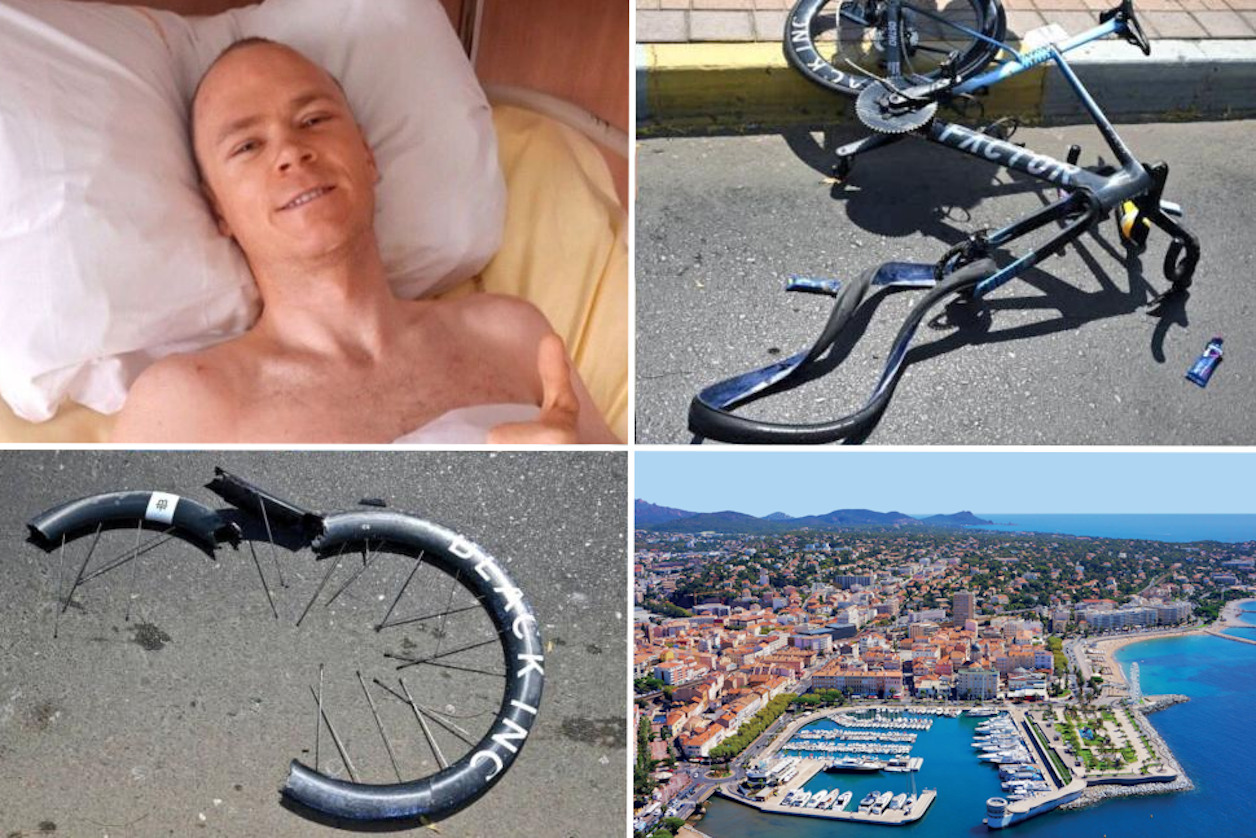
Last August 2025, Froome suffered one of the most severe crashes ever survived by a professional cyclist whilst training near his home in Monaco, airlifted to hospital, he was treated for
- five broken ribs
- a fractured spine
- a collapsed lung
- a pericardial rupture — a life-threatening tear to the sac surrounding the heart.
It was the second major crash of his later career, following the 2019 Dauphiné reconnaissance accident that signalled the decline of the Sky dynasty and the rise of a new generation led by Tadej Pogacar.
Despite signing a high-profile contract with Israel-Premier Tech in 2021, Froome never returned to winning form. His absence from the 2023 Tour team — and public questioning from team owner Sylvan Adams — marked the quiet fade of a once-towering figure.
A New Role, A New Era
Froome will remain present at this year’s 2026 Tour, serving as a brand ambassador for Skoda, watching from the sidelines as Pogacar attempts to equal his own tally of four wins.
“He’s a lot younger than I was when I was trying to go for my potential number five,” Froome said. “He’s had an amazing season so far this year and it’s going to be hard to see anything stopping him at this rate.”
The End of an Empire
With Froome’s retirement, cycling officially closes the chapter on the Sky era — a decade defined by marginal gains, relentless control of the peloton, and a rider whose calm, metronomic power turned mountain stages into coronations.
His legacy:
- 7 Grand Tour victories
- 4 Tours de France
- 1 Giro d’Italia
- 2 Vueltas
- A generation of riders inspired
- A sport forever changed
Chris Froome leaves professional cycling not with a final victory, but with something rarer: a career that defined an era, survived catastrophe, and ended with dignity.
Chris Froome’s Colle delle Finestre Masterpiece Crowned the Most Heroic Mountain Stage of the Decade
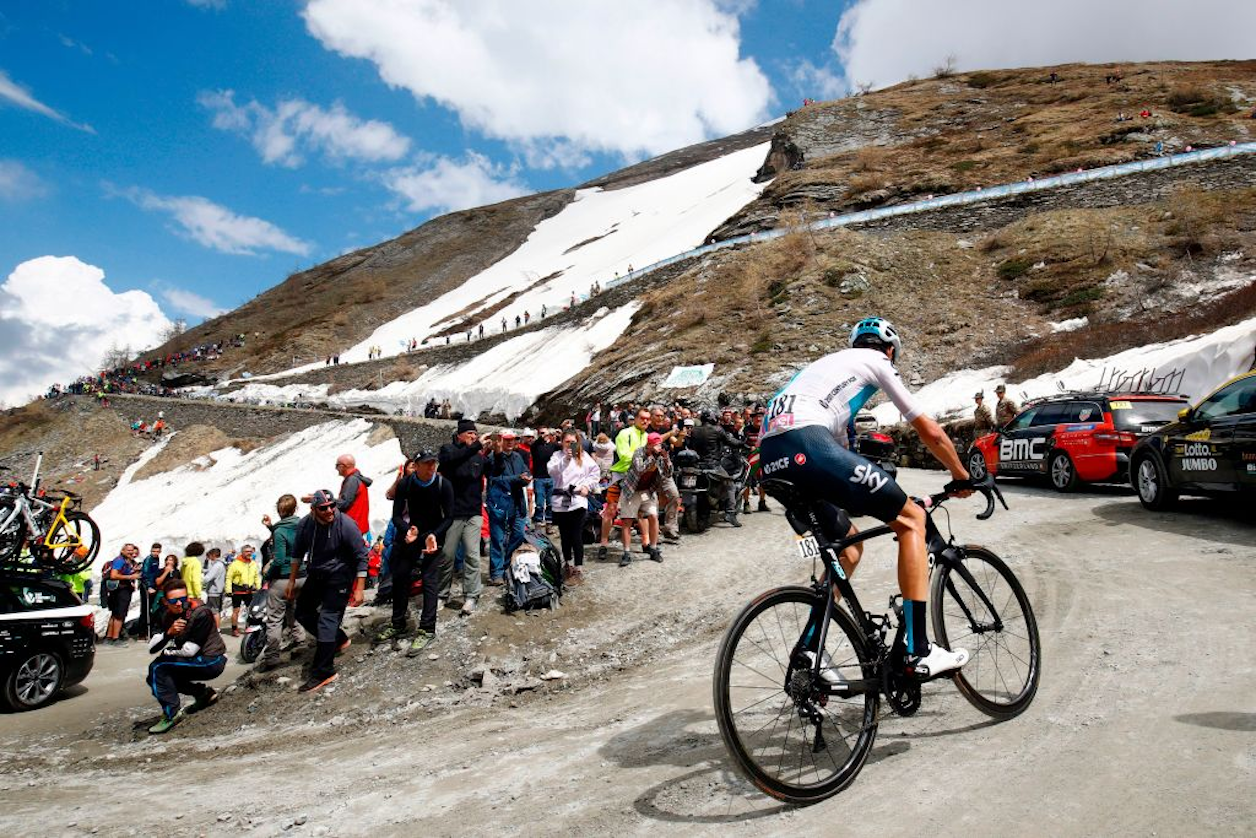
In a resounding verdict from thousands of passionate cycling fans, Chris Froome’s legendary attack on the Colle delle Finestre during Stage 19 of the 2018 Giro d’Italia has been officially crowned the most heroic mountain stage of the past decade.
The poll, conducted across the myCols app, social media channels, and a dedicated public survey, invited fans to choose from ten of the most iconic mountain battles of recent years. Froome’s astonishing 80-kilometre solo raid — a ride that rewrote the Giro d’Italia and stunned the cycling world — emerged as the overwhelming favourite.
On May 25, 2018, Chris Froome delivered a performance so audacious, so tactically perfect, and so physically brutal that it instantly entered cycling folklore.
Starting the day over three minutes behind race leader Simon Yates, Froome launched a long-range attack on the gravel slopes of the Colle delle Finestre, the Giro’s highest and most feared climb. What followed was a display of pure, unfiltered dominance:
- 80+ kilometres alone
- Three major climbs
- Gravel, chaos, and carnage behind him
- The maglia rosa taken in one of the greatest comebacks in Grand Tour history
Fans watched in disbelief as Froome powered away from the shattered peloton, cresting the Finestre with a gap that only grew as he descended and climbed toward Bardonecchia. By the finish, he had turned the Giro upside down — and secured one of the most dramatic victories ever seen in a Grand Tour.
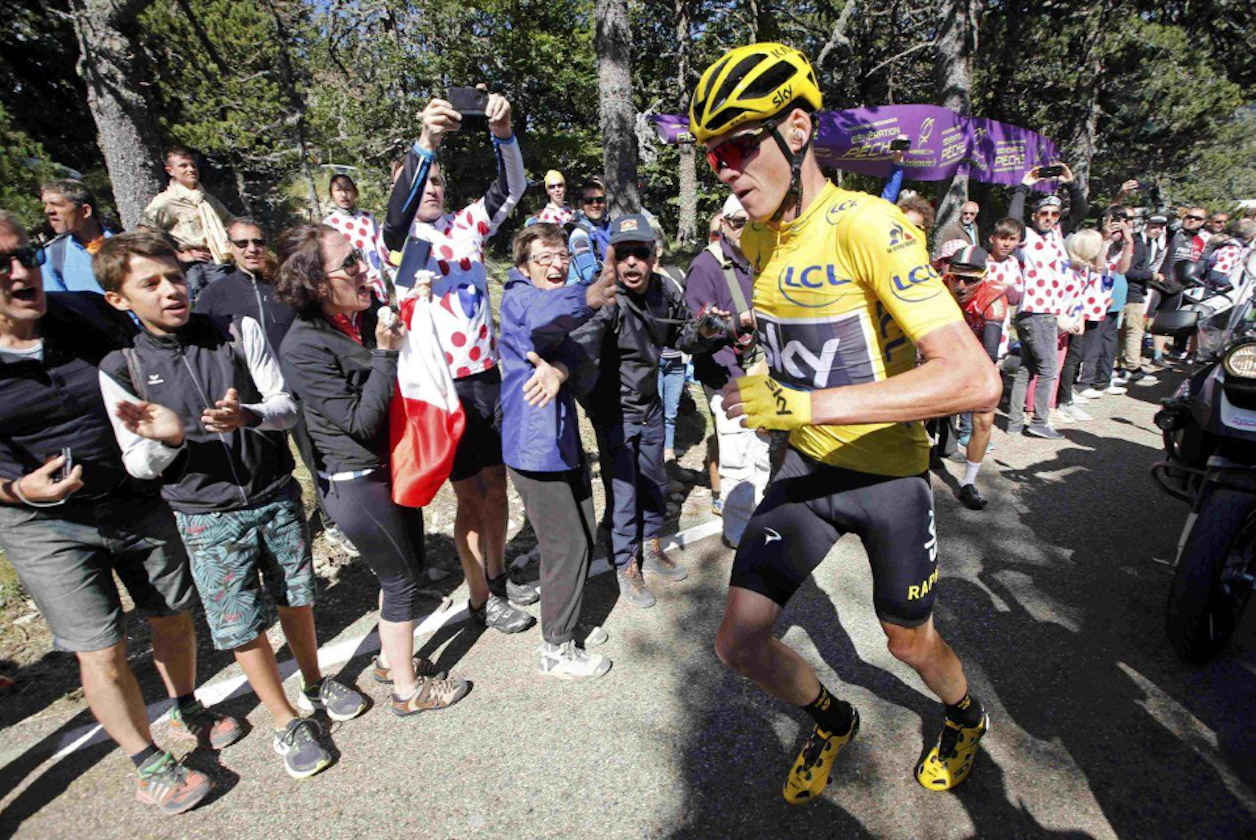
Froome loses his bike and runs up Ventoux at 2016 Tour de France
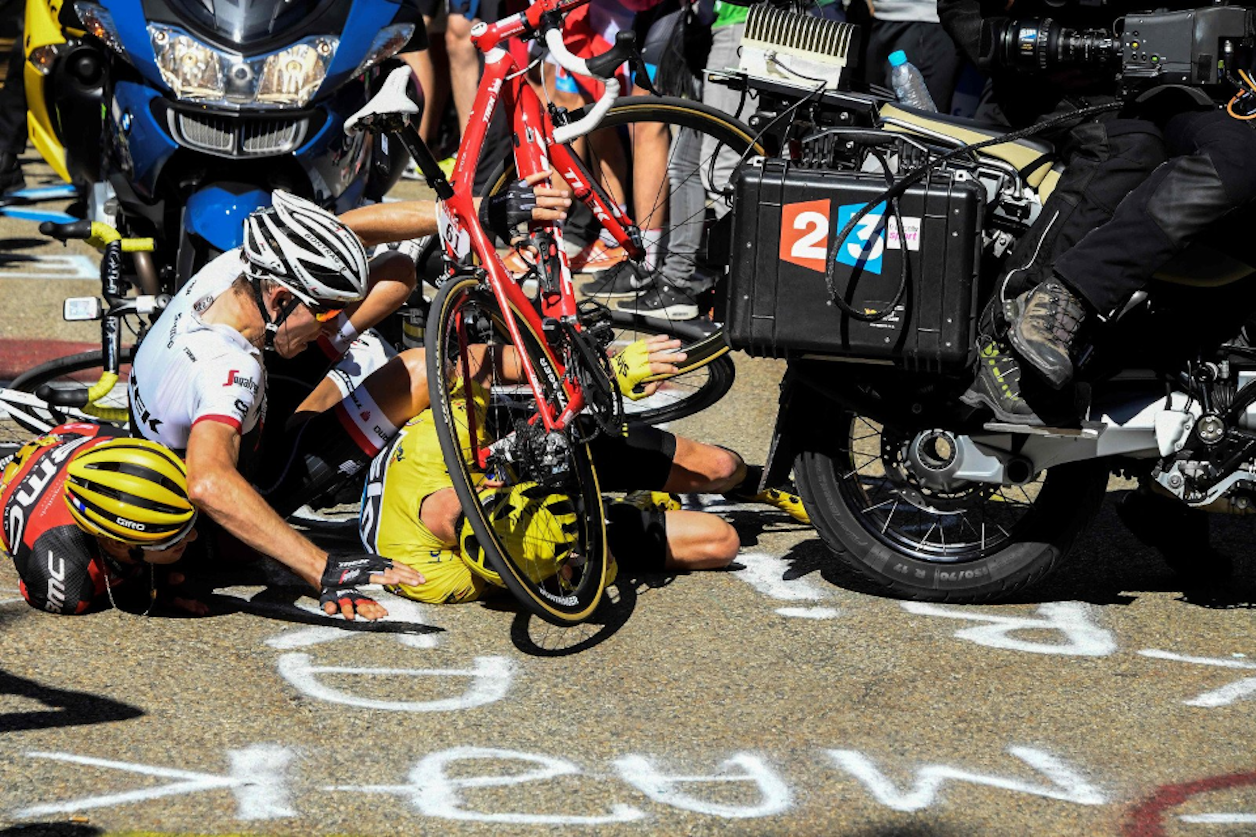
— In one of the most astonishing and chaotic moments ever witnessed at the Tour de France, Chris Froome — race leader, yellow jersey, and three-time champion at the time — was forced to abandon his bike and run up Mont Ventoux after a crash involving a motorbike brought Stage 12 to a dramatic standstill.
The incident unfolded in the final kilometres of the Bastille Day summit finish, where dense crowds and narrowing road conditions created a volatile atmosphere. As Froome accelerated behind Richie Porte and Bauke Mollema, a race motorbike was forced to stop abruptly, triggering a pile-up that sent Froome crashing into the tarmac and destroyed his bike beyond immediate use.
With the Tour de France hanging in the balance and no replacement bike in sight, Froome made a split-second decision that stunned the sporting world.
He started running. Up Mont Ventoux. In the yellow jersey!
Television cameras captured the surreal image: Froome sprinting on foot, helmet on, cleats slipping on the scorching asphalt, desperately trying to limit the time loss as chaos erupted around him. Spectators screamed. Commentators were speechless. Social media exploded.
It was a moment that transcended cycling — a scene so bizarre, so desperate, and so heroic that it instantly entered Tour de France mythology.
Eventually, Froome received a spare bike from neutral service, then another from his team car, before remounting and finishing the stage in a state of shock. Hours later, race officials intervened, acknowledging the unprecedented circumstances and reinstating Froome’s overall lead.
The image of Froome running — arms pumping, face set with determination, yellow jersey flapping — remains one of the most iconic visuals in Tour de France history.